
Insomnia Part 3: Make your room a sleep signal
Your environment should whisper to your brain that it is safe to power down. Tonight we tune temperature, light, sound, and tech boundaries so your room stops teaching alertness and starts teaching sleep.
Optimize the room: temperature, light, sound, and tech boundaries.
Set one bedtime routine trigger (light/temperature) and one tech cutoff rule.
Cool the room, dim lights 60 minutes before bed, and silence notifications.
Notes on wake-ups, room changes, and any light/noise triggers.
Today's blueprint
Your room reset
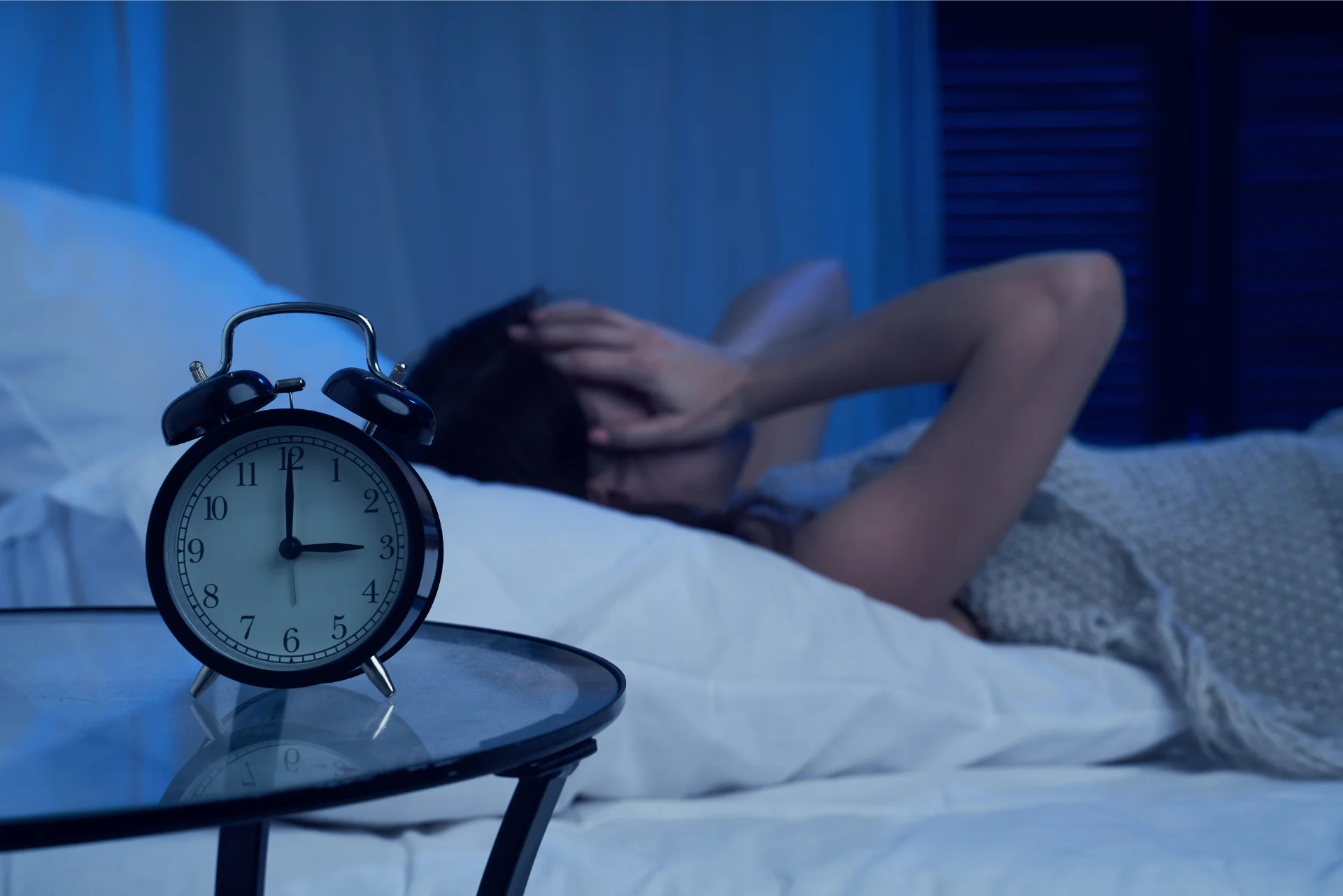
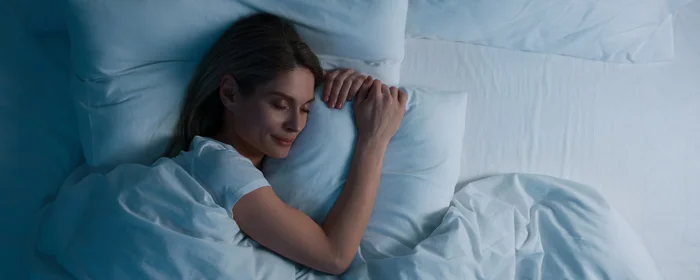
Cool the room and use breathable bedding
Dim lamps (warm light) 60 minutes before bed
Turn on white noise or a fan
Place phone out of reach on Do Not Disturb
Start here
Set a calm baseline every night
Most people need the same three signals for sleep: cooler air, darker light, steady sound. Layer in a tech boundary so your brain is not waiting for alerts.
65-68 F works for most; start with cooler than daytime settings.
Dim overheads; use lamps with warm bulbs. Blackout shades if early light wakes you.
Consistent hum beats sudden noise. Use a fan or white noise near the door/window.
Screens off 30 minutes before bed; phone outside arm's reach on Do Not Disturb.
If you wake up at night
Stay off bright lights; use a small amber light if needed.
Do not check the clock; sit in a chair and read 5-10 pages under low light.
If noise woke you, add white noise near the source (door/window) before returning to bed.
Light playbook
Dim lights 60 minutes before bed; avoid bright kitchens and bathrooms.
Use warm bulbs (2700K) in lamps; avoid overheads aimed at your eyes.
Blackout curtains or a sleep mask if dawn light wakes you.
If you wake at night, use a small amber night-light to navigate safely.
Sound playbook
White noise or a fan close to the door/window to mask sudden sounds.
If a partner snores, consider earplugs plus white noise; also discuss a sleep apnea screen.
Place your phone face down; turn off vibration for alerts overnight.
Avoid falling asleep with TV on; the audio shifts can trigger arousals.
Tech guardrails
Keep alerts out of your sleep window
Pick a nightly tech cutoff and stick to it (e.g., 60 minutes before bed).
Charge devices outside the bedroom or across the room; use an analog alarm.
Remove news/social apps from the last screen of your phone; default to quiet apps (notes, reading).
Use grayscale mode at night to lower stimulation if you must glance at your phone.
When to reach out
You still wake multiple times despite consistent room changes.
You suspect sleep apnea (snoring, gasping, morning dry mouth).
Restless legs or painful conditions wake you when you try to sleep.
You rely on TV/phone to knock out each night and cannot stop.
Daytime sleepiness or headaches persist even with environment fixes.