
EMS DolorClast
Radial Shockwave Therapy
EMS DolorClast is a non-surgical treatment that uses controlled pressure waves to support irritated tendons, fascia, muscles, and other soft tissues.
At iCare Medical Group, this treatment may be considered when pain has lingered despite rest, stretching, activity changes, or more basic care. The goal is to support healing, reduce pain sensitivity, and improve movement over time as part of a physician-guided recovery plan.

Support for Stubborn Tendon and Soft Tissue Pain
A non-surgical option that may help when selected tendon, fascia, heel, elbow, shoulder, or muscle pain has been slow to improve.
Who May Benefit
Treatment May Help
This treatment may be considered for patients with persistent tendon, fascia, or muscle pain that has not fully improved with first-line care, especially when discomfort is affecting movement, exercise, or day-to-day function.
- Plantar fasciitis and heel pain
- Tennis elbow and other overuse-related tendon pain
- Achilles or patellar tendon irritation
- Selected shoulder tendon concerns after evaluation
- Muscle or soft tissue pain that has been slow to settle
- Patients seeking a non-surgical option within a broader recovery plan
Treatment Experience
What Treatment Is Like
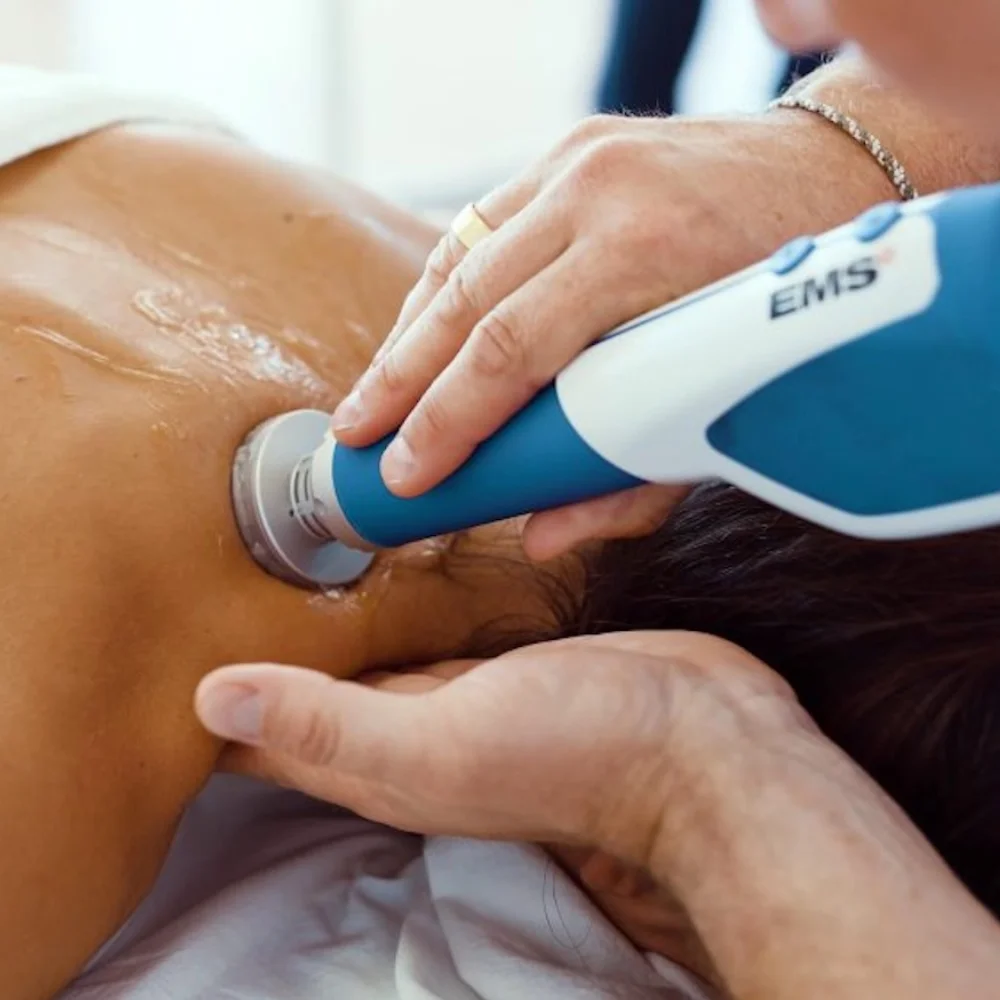
Treatment is delivered in short office visits while controlled pressure-wave pulses are applied to the affected area.
During the session, the treatment area may feel like repeated tapping or pulsing. Some patients may feel temporary intensity or sensitivity, but the visit can be adjusted based on the area being treated, your comfort level, and your recovery goals.
Improvement usually builds over a treatment series rather than after one visit alone. The care team may reassess pain, tolerance, movement, and function across the plan. Temporary soreness, redness, bruising, or sensitivity can happen after treatment. Your provider will review what to expect and whether this option is appropriate for your situation.

Treatment + Device Spotlight
A Non-Surgical Treatment Approach Designed to Support Stubborn Soft Tissue Pain
This non-surgical option may be considered when tendon, fascia, muscle, heel, elbow, or selected shoulder pain has remained irritated despite more basic care.
This treatment spreads pressure waves outward through the treatment area. This is different from focused shockwave, which directs energy into a more selected focal point. At iCare, the care team can help determine which option better fits the tissue involved, pain pattern, treatment area, and recovery goal. The goal is not to use the same treatment for every pain concern. The goal is to choose the option that makes the most sense for the patient.

EMS DolorClast Radial System
This system is designed to deliver controlled pressure waves through a handheld applicator during brief in-office treatment sessions.
- Non-surgical treatment for selected tendon, fascia, and muscle pain
- Uses controlled pressure waves over the treatment area
- May be considered for certain heel, elbow, tendon, shoulder, and soft tissue concerns
- Usually delivered in short office visits with no sedation
- Can be paired with stretching, strengthening, pacing, and physician-guided follow-up
Support for Persistent Pain
This treatment may be considered when tendon, fascia, or soft tissue pain has not fully improved with rest, stretching, or more basic care.
Short In-Office Treatment Series
Visits are usually brief, and improvement often builds gradually over a series rather than after one session alone.
Part of a Broader Recovery Plan
This option may be used together with stretching, strengthening, pacing, activity changes, and provider-guided follow-up.
How We Use This Treatment
We use this treatment thoughtfully as part of a broader recovery plan, not as a stand-alone answer for every pain concern.
It may be considered when persistent tendon, fascia, muscle, heel, elbow, or selected shoulder pain has been slow to improve and the goal is to support tissue recovery, reduce pain sensitivity, and improve day-to-day function.
Fit also matters. The care team reviews pain history, activity pattern, prior treatment response, the tissue involved, safety factors, and how much the issue is affecting movement before deciding whether this is the right next step.
This Type of Care Is Often Discussed Alongside:
- Review of pain history and the involved tissue pattern
- A plan for pacing, stretching, strengthening, or activity changes between visits
- Guidance on which shockwave option better fits the treatment area
- Reassessment of pain, tolerance, and function across the treatment series
- Other supportive care when the broader recovery plan calls for it